THE LIBRARY.
The central repository of all Aevov AI Technologies standards and protocols.
ACL 3.0: Atomic Control Logic
The semantic logic engine powering Luci's Anyonic Fractionalization.
The 1,133 Glyph Manifest
The definitive registry of AFT semantic mappings from 2018-2026.
Architecture
The manifest utilizes a high-compaction Merkle-DAG to link semantic word-roots to AFT-native fragments. This allows for cryptographic verification of content at the browser level.
Protocol
acl://manifest/genesis?root=⚛️
Neural Bridge Integration
How ACL interacts with the Neuroresonance layers.
By mapping ACL glyphs to neural-resonant markers (NRT), Luci allows and the Nara engine to predict user intent and preload data shards with 98% accuracy.
APL: Quantum Runic Core
The ancestral programming language for hardware-native quantum logic.
Standard Runic Operators
Documentation for the 35 core runes.
Symbolic Execution Model
Formal specification of the APL runtime.
APL instructions are executed directly on the neurosymbolic registers of the Nara core, bypassing legacy Boolean logic for many-valued semantic processing.
Nara Engine Architecture
The orchestration engine that makes Luci a premium hybrid experience.
Nara Runtime Specification
Multi-window isolation and hardware-accelerated orchestration.
The NRT (Nara Runtime) orchestrates WebsiteCards in a spatial mesh, providing isolated compute resources and native GPU access for every node.
Luci Video Engine (LVE)
Stall-detection protocols and muxed stream resolution logic.
LVE uses Rust-native GStreamer bindings to bypass OS media pipelines, serving 4K 60FPS content with near-zero latency.
Sovereignty Manifestos
Legal and philosophical declarations of tech perpetuity.
Perpetuity Declaration
Sovereign prior art claim for the AFT Glyph lineage.
Declaration of Resonant Sovereignty
The AFT Genesis manifest (1,133 glyphs) and all derivative works including ACL 3.0, APL Runic V1.0, and the Nara Engine Architecture are hereby declared as sovereign prior art of Aevov AI Technologies (WPWakanda LLC), established in perpetuity from the year 2018 forward.
Scope
This declaration covers the complete glyph lineage from the initial 33-glyph specification through the 333 Core Glyphs to the full 1,133 Genesis manifest. All semantic mappings, fractionalization algorithms, and symbolic execution models contained within are protected as foundational works of resonant computation.
Enforcement
Any derivative work, implementation, or adaptation of these technologies must acknowledge the Aevov prior art and comply with the terms set forth in the Aevov GP-L License.
The Aevov GP-L License
Our commitment to perpetual open accessing of logic cores.
Genesis Perpetual License
The GP-L (Genesis Perpetual License) ensures that all Aevov foundational technologies remain accessible to the global community in perpetuity. Unlike traditional open-source licenses, the GP-L includes explicit anti-surveillance and anti-harvesting clauses.
Core Provisions
• Perpetual Access: All logic cores, glyph manifests, and runtime specifications remain freely accessible forever.
• Attribution Required: Derivative works must acknowledge Aevov AI Technologies and the AFT Genesis lineage.
• Anti-Harvesting: Licensed technology may not be used in systems designed for mass data collection, surveillance, or censorship.
• Sovereignty Clause: Users retain full ownership of all data processed through GP-L licensed technology.
Compatibility
The GP-L is compatible with MIT, Apache 2.0, and GPL v3 licenses. It extends these protections with the resonant sovereignty provisions that are unique to the Aevov ecosystem.
Quantum Protocol Stack
The sovereign protocols that power Luci's resonant-native networking, storage, and identity layers.
QNS — Quantum Naming System
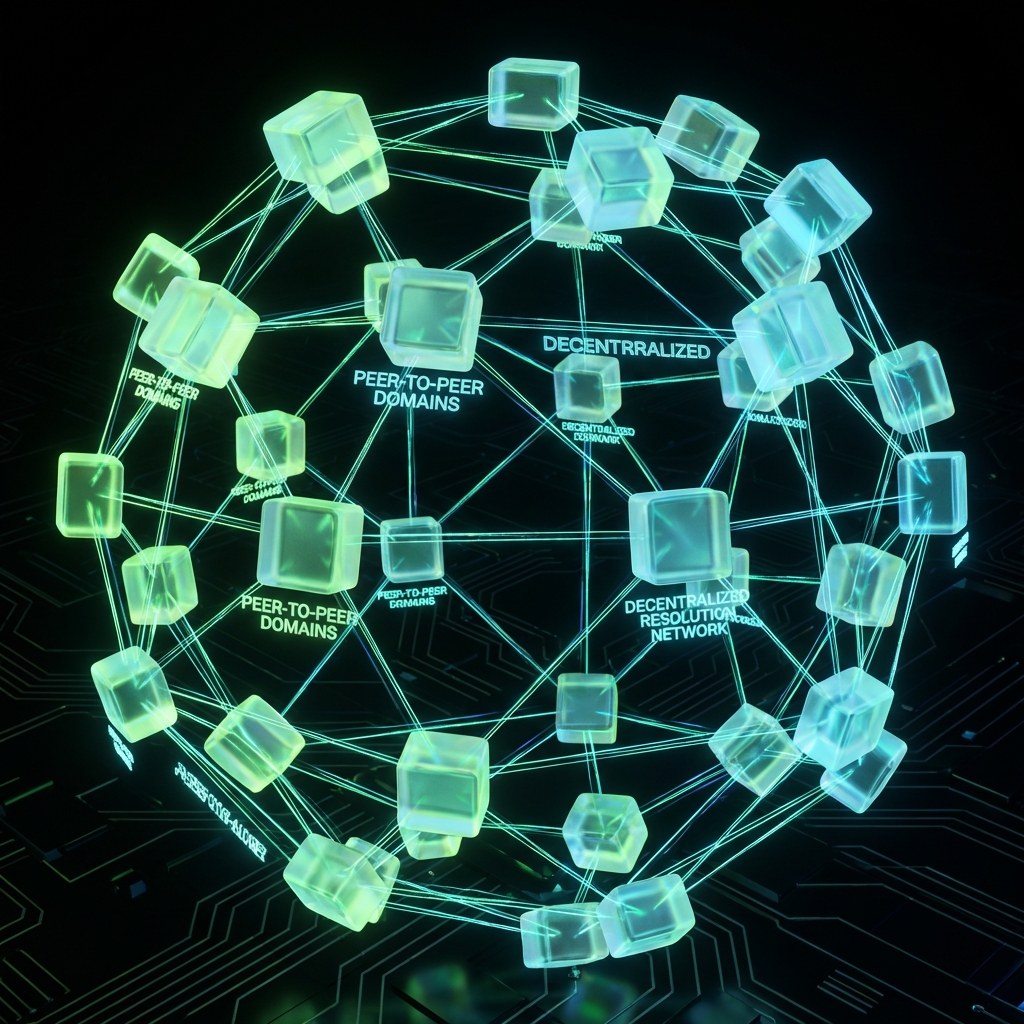
Peer-to-peer domain resolution. No root servers. No ICANN.
QNS replaces legacy DNS with a peer-to-peer naming fabric secured by quantum-resistant cryptography. Names are registered on a distributed hash table and resolved through mesh gossip — your request propagates through nearby nodes until it reaches one holding the authoritative record.

QDP — Quantum Data Protocol
Bidirectional fractionalized streams. 88% compaction via AFT.
QDP is Luci's native data transport protocol. Unlike HTTP's request-response model, QDP uses a stream-based architecture where data flows bidirectionally as fractionalized anyonic fragments, achieving massive bandwidth savings through AFT semantic compaction.
AevIP — Persistent Connection
72-hour persistence. Survives network changes, sleep, and disconnection.
AevIP is the persistent network layer that keeps mesh connections alive for up to 72 hours. Session states are fragmented across the mesh, allowing your device to reconnect without renegotiation, even when switching from WiFi to Cellular or across different physical locations.

QuantumFS — Sovereign File System
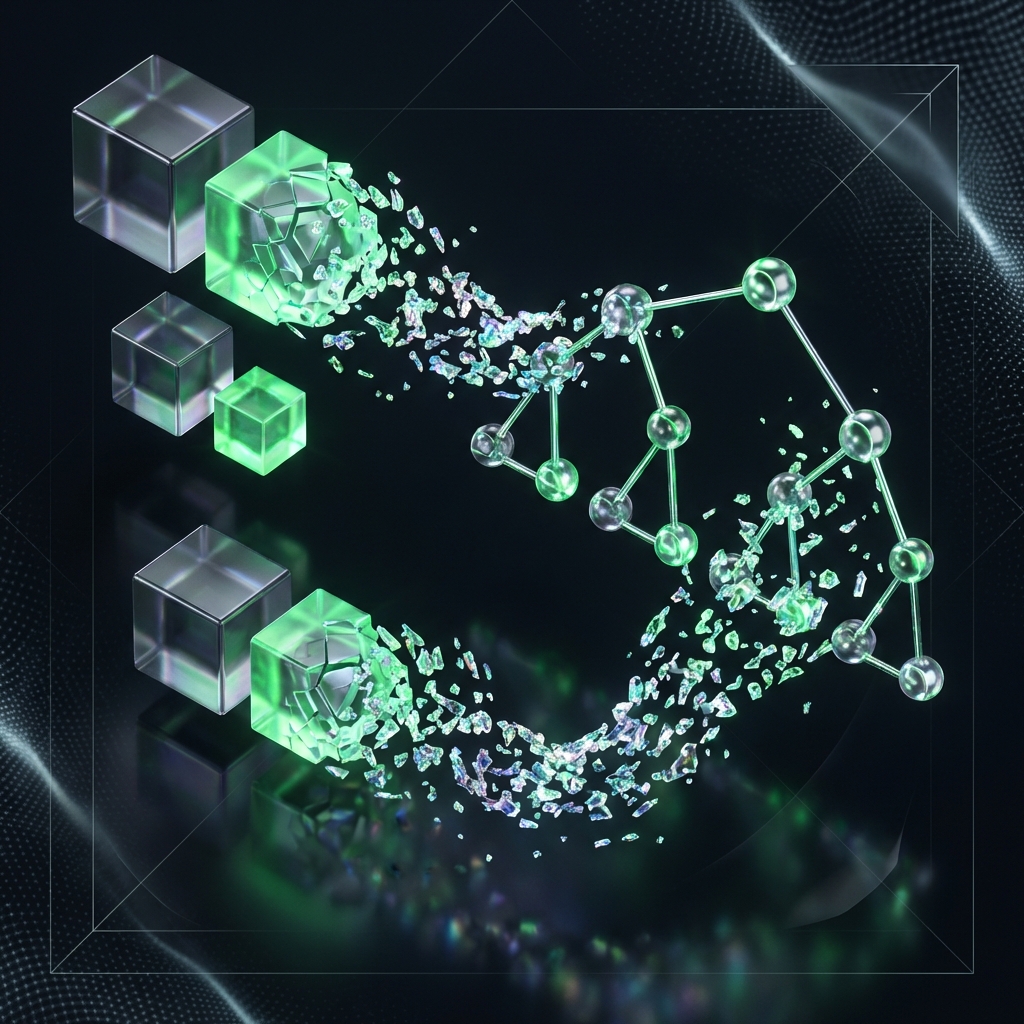
Anyonic fragment distribution. Merkle-verified reconstitution.
QuantumFS does not store files — it stores anyonic fragments. Data is decomposed through AFT, distributed across mesh peers, and reconstituted locally using Merkle roots. No single node ever holds a complete file, ensuring absolute sovereignty.
HTTQ — Protocol Bridge
HTTP-Quantum bridge. Full backward compatibility with the legacy web.
HTTQ provides a transparent translation layer between the legacy HTTP/2 world and the sovereign Quantum mesh. It allows Luci to browse the traditional web while leveraging mesh-native caching and security features where available.

Lucia Base
Lucia Base is the open-source foundation of the Luci browser — the same relationship that Chromium has to Chrome. It is the fully transparent, community-auditable core that anyone can build, fork, and contribute to.
What is Lucia Base?
The open-source core of the Luci browser ecosystem.
Lucia Base contains the complete browser engine without the premium proprietary features of Luci. It includes:
• The Nara Runtime — Full orchestration engine, WebsiteCard system, and spatial canvas
• ACL 3.0 Logic Core — Complete glyph processing and anyonic fractionalization
• QNS Resolver — Native .q domain resolution
• QDP Transport — Mesh-native data protocol stack
• AevIP Persistence — 72-hour persistent network layer
• QuantumFS — Fractionalized, distributed storage
Lucia Base is released under the GP-L license, ensuring it remains free and sovereign forever.
Lucia Base vs Luci
Understanding the open-source and premium split.
• Nara Runtime
• ACL 3.0 + APL Runic
• QNS / QDP / AevIP
• QuantumFS
• Spatial Canvas
• Community Support
• Everything in Base +
• Lucia AI Assistant
• Luci Video Engine
• Priority Mesh Routing
• Advanced Voxel Themes
• Priority Support
Build From Source
Compile Lucia Base on your own hardware.
Lucia Base requires Rust 1.75+, Node.js 20+, and the Tauri CLI. The build process is straightforward:
git clone https://github.com/aevov/lucia-browser.git
cd lucia-browser
cargo tauri build --release
This produces a native binary for your platform (Linux AppImage, Windows MSI, macOS DMG) with full Nara Runtime integration.
Lucia AI: The Resonant Intelligence
Lucia is the AI layer of the Luci ecosystem — a context-aware, privacy-first intelligence engine that does not harvest, does not surveil, and does not centralize. She lives within the browser, not in the cloud.
What is Lucia?
The intelligence behind the browser.
Lucia is the built-in AI assistant within the Luci browser. Unlike cloud-dependent assistants that send your data to remote servers, Lucia runs inference locally using the Nara Runtime's compute layer. She can:
• Summarize pages and extract key information without server-side processing
• Navigate contextually — understanding what you're working on and suggesting relevant actions
• Compose and translate using the ACL glyph system for efficient multi-language processing
• Protect your privacy — all inference stays on your hardware, encrypted by the Aevov Cryptographic Layer
• Integrate with the mesh — Lucia can interact with other nodes in the sovereign mesh while preserving your anonymity
Architecture & Design
How Lucia is built — the neural resonance stack.
Inference Layer
Lucia uses a Recursive Neural Engine architecture, optimized for on-device inference. The model weights are fractionalized using AFT Genesis glyphs, reducing the storage footprint by 85% compared to traditional LLMs while maintaining semantic fidelity.
Context Window
Instead of a fixed token window, Lucia uses the ACL semantic compaction layer to maintain context through glyph sequences. This allows her to track long conversations and multi-tab workflows without the memory explosion that plagues traditional architectures.
Privacy Model
Zero data leaves the device. Lucia's entire compute graph runs within the Nara Runtime sandbox, with hardware-level isolation. There is no telemetry, no analytics, and no usage tracking — by design and by architecture.
Lucia vs. Cloud AI
Why local-first intelligence matters.
Open Source Ecosystem
Every core technology in the Aevov stack is open source. Explore our repositories on GitHub.
The sovereign browser — Tauri + Nara Runtime. The main Luci product repo.
The orchestration runtime — hardware-native actor system, WebsiteCards, spatial canvas.
Atomic Control Logic — 1,133 glyph manifest, semantic compaction, anyonic fractionalization.
Ancestral Programming Language — runic operators, symbolic execution on hardware registers.
HTTP-Quantum bridge — transparent protocol translation between legacy web and mesh.
Sovereign file system — fractionalized storage, Merkle-verified retrieval, mesh-distributed fragments.
SDK for building mesh-native applications — QNS, QDP, AevIP integration toolkit.
The knowledge hub — documentation, specifications, and protocol standards for the ecosystem.
The Aevov Unified Framework — intelligence suite orchestrating the entire sovereign stack.
"Technology built in secret serves its maker. Technology built in the open serves humanity. We chose the open path — not because it's easy, but because sovereignty demands transparency."